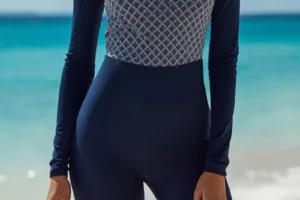
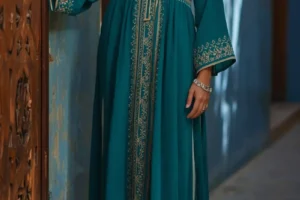
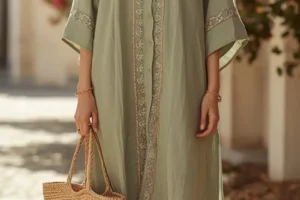
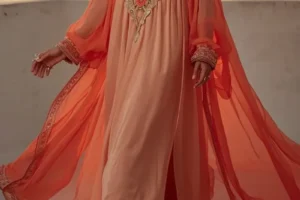
Picture this: a summer afternoon in Dubai, Sydney, or Los Angeles — the kind of heat that makes you question every clothing decision you’ve ever made. Most women in this moment reach for the least amount of fabric possible. Yet some of the most elegantly dressed women at these same events are wearing a full-length abaya and looking entirely unbothered by the temperature.
The difference isn’t luck or geography. It’s fabric intelligence. A lightweight cotton abaya for warm weather is one of those genuinely practical discoveries that changes the way you approach modest dressing from spring through early autumn — not as a compromise, but as an upgrade.
If you’ve ever pulled on a dark polyester abaya in summer heat and immediately regretted it, this guide was written for you.
Why Fabric Choice in Warm Weather Is Not a Small Decision
The modest fashion world doesn’t talk about this enough: fabric selection in heat is a health and comfort issue, not just an aesthetic one. Wearing the wrong material — typically a synthetic blend marketed as “silky” or “smooth” — traps body heat, accelerates perspiration, and creates that clinging, uncomfortable feeling that makes full-length dressing feel like a punishment rather than a choice.
The consequence goes beyond discomfort. Poor fabric choices affect posture. Women subconsciously adjust their posture when they’re physically uncomfortable — pulling at sleeves, tugging at collars, shifting weight — and those small movements quietly undermine the entire presence a beautifully modest outfit is supposed to project.
This is where the lightweight cotton abaya for warm weather earns its place as a genuine wardrobe essential rather than a seasonal afterthought.

What Makes Cotton the Right Choice for Warm-Weather Abayas
Natural Breathability That Synthetic Fabrics Cannot Replicate
Cotton is a naturally porous fiber. Its structure allows air to circulate between the fabric and the skin — what textile experts refer to as moisture-wicking breathability. This means that as your body temperature rises, cotton actively pulls moisture away from the skin and releases it into the surrounding air, creating a natural cooling effect.
Synthetic alternatives — polyester, nylon blends, and even some rayon variants — lack this capacity. They wick moisture, yes, but trap it within the fabric layer rather than releasing it. The result is that damp, heavy feeling after thirty minutes in direct sunlight.
According to fabric research published by the Textile Exchange, natural cotton fibers have a moisture absorption capacity up to 27 times their own weight — significantly higher than most synthetic alternatives — which directly translates into comfort during prolonged warm-weather wear.
Softness That Improves With Every Wash
One of the less-discussed advantages of a quality cotton abaya is its longevity of comfort. Unlike synthetic fabrics that retain stiffness or develop pilling over repeated washes, high-grade cotton softens with each laundering cycle. A well-constructed cotton abaya you purchase today will genuinely feel better two seasons from now — which speaks directly to the AriyaEthno philosophy of choosing pieces that reward long-term investment over fast-fashion rotation.
Weight Distribution Across a Full-Length Silhouette
A lightweight cotton abaya for warm weather achieves something technically difficult: maintaining a full-length silhouette without adding thermal weight. The natural lightness of fine-weave cotton — particularly Egyptian cotton, organic cotton poplin, and washed cotton voile — means the garment moves freely without the stiffness of structured fabric or the clingy heaviness of denser weaves.
This is a detail I notice consistently when comparing modest silhouettes at fashion events across warm-weather markets: the women who look effortless in full-length modest dress are almost always wearing natural fibers. The fabric moves with them rather than against them.
7 Reasons to Choose a Lightweight Cotton Abaya for Warm Weather
1. Thermoregulation Without Compromise Cotton’s natural fiber structure regulates body temperature passively — warming slightly in cool morning air and cooling as temperatures climb. For women who transition between air-conditioned interiors and outdoor heat throughout the day, this thermoregulation is genuinely functional.
2. Skin Compatibility Cotton is hypoallergenic and non-irritating against prolonged skin contact — a real consideration for full-length garments worn across an entire day. Synthetic blends, particularly in direct sunlight, can cause friction and skin sensitivity that worsens as the day progresses.
3. Wrinkle Recovery in Washed Variants Pre-washed cotton poplin and cotton voile have naturally relaxed wrinkle recovery — meaning the soft creasing from daily movement reads as intentional texture rather than neglect. This makes them ideal for travel and full-day wear without the stiffness of formal fabrics.
4. Color Retention in Natural Dyes For women who gravitate toward rich earth tones, blush neutrals, or deep jewel tones — the preferred palette for modest fashion — cotton holds natural and low-impact dyes beautifully without the color-fading acceleration that synthetics experience under UV exposure.
5. Styling Range From Casual to Semi-Formal A lightweight cotton abaya for warm weather is not limited to casual contexts. The right construction — an open-front abaya in fine cotton poplin with clean tailoring — can move through a morning coffee meeting, an afternoon gallery visit, and an early evening dinner without requiring a change of garment.
6. Easy Care That Respects the Garment Machine-washable, quick-drying, and requiring no specialist dry-cleaning — quality cotton abayas return time to their wearer rather than demanding it. This practicality is often overlooked in modest fashion purchasing decisions but becomes deeply relevant after the first season of regular wear.
7. Genuine Sustainability Credentials Organic and sustainably sourced cotton carries meaningful environmental credentials compared to petroleum-derived synthetic fabrics. For buyers who align their purchasing decisions with broader values — as an increasing proportion of the AriyaEthno community does — this matters.
Lightweight Cotton Abaya Fabric Comparison: Which Type Is Right for You?
| Cotton Type | Weight | Drape | Best Occasion | Care |
|---|---|---|---|---|
| Cotton Voile | Ultra-light | Flowing, luminous | Formal / Evening | Gentle machine wash |
| Cotton Poplin | Light-medium | Structured, crisp | Smart Casual / Daily | Machine wash |
| Cotton Lawn | Ultra-light | Soft, subtle sheen | Casual / Travel | Machine wash |
| Organic Cotton | Light | Relaxed, matte | Everyday / Ethical | Machine wash |
| Cotton Linen Blend | Medium | Natural, textured | Casual / Resort | Machine or hand wash |
For summer specifically, cotton voile and cotton lawn offer the finest hand-feel and the most luminous drape — qualities that make a full-length abaya look intentional and refined rather than simply covered. If you’re exploring the broader world of natural-fiber modest dressing for heat, the detailed comparison in our guide on choosing a comfortable linen abaya dress for summer gives important context on how linen and cotton compare across seasonal conditions.
How to Style a Lightweight Cotton Abaya for Warm Weather
Keep the Palette Light and Tonal
In warm weather, heavy contrast — a stark black abaya over a bright white hijab, for example — reads visually “heavier” than the actual garment weight. Tonal dressing, where the abaya and hijab sit within the same color family (dusty rose and ivory, soft sage and warm cream, camel and sand), creates a visually breathable look that reinforces the lightness of the fabric.
Choose Accessories That Don’t Add Heat
Metal jewelry absorbs and retains heat in direct sunlight. In warm-weather styling, lean toward woven rattan bags, natural stone jewelry, and leather sandals in neutral tones. These materials don’t conduct heat and they anchor the natural-fabric aesthetic of a cotton abaya without visual or literal weight.
Layer Minimally — One Piece Only
The impulse to layer over a lightweight cotton abaya often works against the purpose of the fabric. If additional coverage is needed, one lightweight cotton or linen throw scarf is enough. A structured cardigan or denim jacket in heat adds both visual and thermal weight that contradicts the elegance of the base garment.
Match the Occasion to the Silhouette
Not all cotton abayas are made for all contexts. An open-front structured cotton poplin abaya with clean seaming reads professional and intentional — appropriate for business casual, city shopping, and gallery settings. A relaxed cotton lawn kimono-style abaya with soft draping reads resort and leisure — ideal for coastal travel, weekend markets, and outdoor gatherings.
Understanding this distinction saves the frustration of wearing a beautiful garment in the wrong context. For women building a complete modest wardrobe that spans all these occasions, exploring modest maxi dresses for women alongside cotton abayas gives a full picture of how silhouette and fabric work together across different settings.
Caring for Your Lightweight Cotton Abaya — Practical Rules
Washing: Turn inside out before machine washing on a gentle cycle with cold water. Hot water accelerates fiber breakdown in fine cotton weaves.
Drying: Air-dry flat or on a wide-shoulder hanger away from direct sunlight. Direct UV exposure causes natural cotton to yellow over time and weakens fine weave structures.
Ironing: Cotton responds beautifully to a warm iron with light steam. Iron while slightly damp for the cleanest result. For cotton voile, use a pressing cloth to avoid direct heat contact on the surface.
Storage: Store folded along the garment’s natural seam lines rather than on a hanger for lightweight pieces — extended hanger storage can distort the shoulder structure of fine-weave cotton over time.

FAQ: Lightweight Cotton Abaya for Warm Weather
Q: Is a cotton abaya suitable for very humid climates, not just dry heat? Yes — cotton’s moisture-wicking capacity makes it equally effective in humid conditions as in dry heat. In high-humidity environments, opt for looser weaves like cotton voile or cotton lawn rather than tighter poplin constructions, as open weaves allow more airflow against the skin.
Q: How do I prevent a lightweight cotton abaya from becoming see-through in sunlight? Choose abayas with a medium-thread-count cotton or a subtle inner lining at the bodice. Cotton lawn and voile in lighter colors can become translucent in direct sunlight — layering a fitted cotton slip underneath in a matching tone resolves this completely without adding significant heat.
Q: Can I wear a lightweight cotton abaya for warm weather to formal events? Absolutely, with the right construction. Cotton voile abayas with hand-finished details — such as lace trim, subtle embroidery, or pintuck pleating — carry formal occasion weight without the thermal burden of heavier formal fabrics. Pair with metallic sandals and a silk-blend hijab to elevate the overall register.
Q: How many times can I wash a quality cotton abaya before it loses its shape? A well-constructed cotton abaya — particularly one with quality seaming and preshrunk fabric — maintains its shape for 50–80 wash cycles with proper care (cold water, gentle cycle, air dry). Lower-quality cotton blends typically show distortion after 20–30 washes.
Q: What color lightweight cotton abaya is most versatile for warm weather? Warm off-white, soft ivory, dusty blush, and sand — these neutral warm tones reflect rather than absorb sunlight, keep you cooler, and pair with the widest range of hijab and accessory colors. Deep tones like cobalt and forest green are beautiful but absorb more solar heat than lighter values.
The Closing Thought
There’s a quiet confidence that comes from knowing your clothing is working for you — not against you. A well-chosen lightweight cotton abaya for warm weather is that kind of garment: considered, functional, and genuinely beautiful in the way that only natural fabrics achieve at full length.
At AriyaEthno, every piece we curate begins with this question: does this garment serve the woman wearing it as fully as it deserves? Warmth, comfort, occasion range, and lasting quality — these are not secondary considerations. They are the foundation.
Dress with intention. Choose fabrics that honor the climate you’re in. And let the elegance follow naturally from there.